 AstraLink
Glossary
Modalities in astrology: cardinal, fixed and mutable signs
Astrology sorts the twelve signs two ways: by element and by modality. The modalities — cardinal, fixed and mutable — describe how a sign moves through the world: whether it starts things, holds them steady, or adapts to whatever comes. Learn what each modality does, which signs belong to it, and what your own modal balance says about how you operate.
The modalities — also called qualities or quadruplicities — sort the twelve zodiac signs into three groups by how they operate: cardinal signs (Aries, Cancer, Libra, Capricorn) initiate, fixed signs (Taurus, Leo, Scorpio, Aquarius) sustain, and mutable signs (Gemini, Virgo, Sagittarius, Pisces) adapt. Each modality holds one sign of every element.
What are the modalities in astrology?
The modalities — also called the qualities or quadruplicities — are one of the two systems astrology uses to sort the twelve zodiac signs. The other is the four elements: fire, earth, air and water. Where the elements describe what a sign is made of, the modalities describe how it moves: whether it starts things, holds them steady, or bends with change. There are three, and each one contains four signs.
- Cardinal — Aries, Cancer, Libra, Capricorn — initiate. They are the starters and the openers, the ones with the idea and the nerve to begin.
- Fixed — Taurus, Leo, Scorpio, Aquarius — sustain. They stabilise, commit and hold a course, for better and for stubborn.
- Mutable — Gemini, Virgo, Sagittarius, Pisces — adapt. They flex, edit, connect and let go, thriving in transition.
The elegant part: each modality holds exactly one sign of every element, so every sign is a unique pair of one element and one modality. Capricorn is the only cardinal earth sign; Scorpio is the only fixed water sign. That pairing is what makes a sign specific rather than generic.
How the modalities map to the seasons
The logic comes straight from the calendar. Cardinal signs open each season — Aries at the spring equinox, Cancer at the summer solstice, Libra at the autumn equinox, Capricorn at the winter solstice — which is why they carry the charge of beginnings and initiative. Fixed signs sit in the settled middle of each season, so they hold and stabilise. Mutable signs close each season and hand over to the next, which is why they specialise in transition, flexibility and letting go.
How to find your modality in a chart
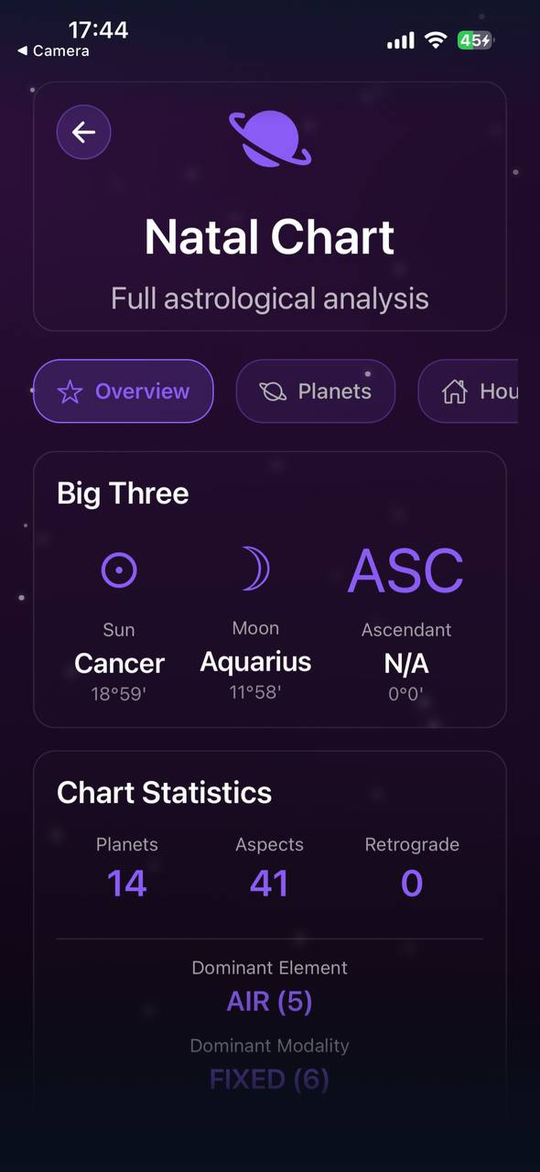
You already know one modality: your Sun sign's. But most astrologers read the balance across the whole chart. Count the modality of your Sun, Moon, rising sign and the personal planets — Mercury, Venus and Mars — and a pattern emerges called your modal balance. The AstraLink birth chart reading names your dominant elements and modalities for you, right alongside your Big Three.
- Cardinal-heavy charts start things easily and lead, but can leave a trail of half-finished projects.
- Fixed-heavy charts are loyal, determined and hard to derail — and can dig in well past the point of usefulness.
- Mutable-heavy charts are adaptable, curious and superb in flux, but may scatter or struggle to commit.
Most people carry all three. A chart missing one modality entirely is worth noticing — it often shows where you overcompensate.
Why modalities matter, with examples
Modality is the difference between two signs of the same element. Aries and Leo are both fire, but Aries (cardinal) lights the match while Leo (fixed) keeps the fire burning. Cancer and Capricorn are both cardinal, yet Cancer initiates through feeling and care and Capricorn initiates through strategy and the long game. Gemini (mutable air) changes its mind mid-sentence and means it; Scorpio (fixed water) would rather transform than budge.
Modality also explains a lot of chart tension. Signs that share a modality sit 90° or 180° apart, so they form squares and oppositions with one another. All four cardinal signs square and oppose each other — the "cardinal cross" — which is why a T-square always links three signs of a single modality. When a chart concentrates planets in one modality, those planets tend to argue in a recognisable, familiar way.
None of this is a verdict. Your modal balance describes style, not fate — a lens on how you naturally start, sustain and adapt. Read your daily horoscope with your dominant modality in mind and the advice tends to land differently.
The Big Three: three layers of you
Sun, Moon and rising sign are where every chart reading starts.
Frequently asked questions
What are the modalities in astrology?
The modalities, also called qualities or quadruplicities, are one of two ways astrology classifies the twelve signs. They describe how a sign operates: cardinal signs (Aries, Cancer, Libra, Capricorn) initiate, fixed signs (Taurus, Leo, Scorpio, Aquarius) sustain, and mutable signs (Gemini, Virgo, Sagittarius, Pisces) adapt. Each modality contains one sign of every element, which is why the two systems together pin down each sign.
What are cardinal, fixed and mutable signs?
Cardinal signs begin each season and specialise in starting, leading and initiating: Aries, Cancer, Libra and Capricorn. Fixed signs fall in the middle of each season and specialise in sustaining, stabilising and committing: Taurus, Leo, Scorpio and Aquarius. Mutable signs end each season and specialise in adapting, connecting and letting go: Gemini, Virgo, Sagittarius and Pisces. Every sign is one modality plus one element.
How do I find my dominant modality?
Look at more than your Sun sign. Note the modality of your Sun, Moon, rising sign and personal planets — Mercury, Venus and Mars — then see which modality appears most. That is your modal balance. A cardinal emphasis leans toward initiative, a fixed emphasis toward persistence, a mutable emphasis toward flexibility. AstraLink's birth chart reading calculates your dominant elements and modalities automatically from your birth date, time and place.
What is the difference between the elements and the modalities?
The four elements — fire, earth, air and water — describe what a sign is made of and its basic temperament. The three modalities — cardinal, fixed and mutable — describe how a sign acts: starting, sustaining or adapting. Every sign is a unique combination of one element and one modality, so Capricorn is cardinal earth and Leo is fixed fire. Reading both together is far more precise than either alone.
Why do signs of the same modality clash?
Signs that share a modality sit 90° or 180° apart on the wheel, so they naturally form squares and oppositions, the most dynamic aspects. The four cardinal signs, for example, all square or oppose one another, forming the cardinal cross. That shared modality means they want to operate the same way — all initiating, say — but from clashing directions, which creates productive friction rather than easy agreement.
Early access · US launch
Your whole chart, read by AI — free at launch
Cosmic archetype, chart ruler, strengths, karmic lesson and more, written for your exact placements. Join early access for the complete reading, free.
- Free full birth chart + cosmic archetype at launch
- First in line for chart-based matching in your city
- Founding-member pricing, forever
AstraLink content is written by our editorial team, reviewed for astrological accuracy, and refreshed as the sky moves. Interpretations are for reflection and entertainment; they are not medical, legal or financial advice.