
Get the obstacle named
Ask for the specific thing in the way and whether it has an end. "What would need to change for this to work?" turns a vague feeling into a real conversation — and a real answer.
Dating glossary
You meet someone and it just works — the conversation, the ease, the pull. And then life gets in the way: a cross-country move, a fresh breakup, a job that eats you alive. "Right person, wrong time" names that ache. Here's what it really means, whether it's real or a soft excuse, and how to handle it.
"Right person, wrong time" describes meeting someone you genuinely connect with when life circumstances — distance, healing, other commitments, or plain bad timing — make a relationship impossible right now. It's real when both people want it but can't act yet; it becomes an excuse when it quietly masks avoidance or low commitment.
Right person, wrong time is that gut-punch of meeting someone you genuinely click with — the values line up, the chemistry is loud, the conversation never runs dry — only for life to make a relationship impossible right now. One of you is moving across the country. Someone just got out of a long relationship and isn't whole yet. There's a demanding job, a co-parenting schedule, a visa, a season of grief. The connection is real; the circumstances are not cooperating.
It is real — and it is also one of the easiest phrases to hide behind. The honest version sounds like "I want this, and I can't give it what it deserves yet." The avoidant version sounds the same on the surface but means "I don't actually want to try." Telling them apart is the whole game, and it's why this term earns a spot in our dating glossary right next to situationships and karmic relationships.
You'll recognize the pattern: deep, fast rapport that stalls at the threshold of commitment. It can look like a connection that keeps almost becoming a relationship, a person who disappears "until things calm down," or two people who agree they'd be perfect "in another life." It's distinct from limerence — the obsessive infatuation with someone you barely know — because right-person-wrong-time usually involves two people who actually know and like each other, blocked by something external and specific. This happens to people of any gender and any orientation; the ache of good connection meeting bad timing is wonderfully, frustratingly universal.
The five connections that carry the most weight in a compatibility reading, scored and explained.
Relationships don't form in a vacuum; they form in a context. Researchers who study pair-bonding note that readiness — emotional availability, a stable-enough life, a nervous system that isn't in survival mode — is often the deciding variable, not the strength of the spark.
Attachment theory is the most useful lens here. Building on the work of John Bowlby and Mary Ainsworth, researchers describe how our earliest bonds shape whether closeness feels safe or threatening in adulthood. Someone with an avoidant pattern may unconsciously reach for "wrong time" the moment intimacy gets real — the timing excuse does the distancing for them. Someone who is genuinely mid-healing, by contrast, may name the bad timing precisely because they respect you enough not to show up half-present. (Curious how your chart and your attachment style rhyme? We dig into that in attachment style and astrology.)
Real timing has three fingerprints: it's specific (a named obstacle with an end, not a vague "I'm not ready, maybe ever"), it's mutual (you both say the connection out loud), and it comes with respect (no breadcrumbing, no keeping you on a hook). A convenient story is the opposite — it's fuzzy, one-sided, and tends to reappear exactly when you start to move on. If someone wants you but not the effort, that isn't wrong timing. That's an answer.
Astrology is unusually honest about timing — it's half the discipline. Treat what follows as a pattern, not a prophecy: a lens for reflection, never a cause, a diagnosis, or a verdict on your love life.
The planet most tied to the "wrong time" feeling is Saturn — ruler of structure, delay, maturity and being on time in the first place. In synastry, the comparison of two birth charts, tight Saturn contacts between two people often describe a bond that feels weighty and meaningful but also gated — as if the relationship is asking you both to grow into it before it can hold. That's the restriction-and-timing signature in a nutshell. Meanwhile Venus (how you love), Mars (what you chase), the Moon (what you need to feel safe) and the 7th house of partnership describe the pull itself — why the chemistry is real even when the calendar isn't.
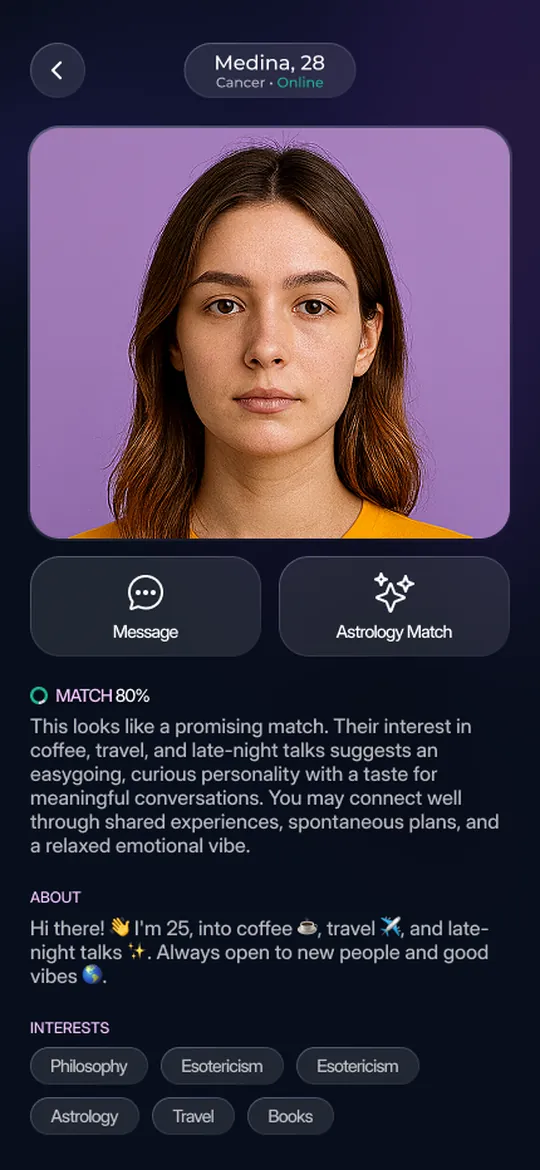
Then there's electional timing: the idea that when you act changes how it lands. That's the premise behind AstraLink's AI Advisor, which reads current transits to a date you pick — the modern, conversational version of "choose a better moment." It's the same instinct behind Cosmic Dating, which matches people by birth-chart compatibility so a real connection has a fighting chance when the timing finally clears. A lens, not a verdict: the chart can describe a tendency, but you and your partner write what happens next. For a specific window — a Saturn transit, a retrograde, a planetary return — check the live calendar in the app rather than treating any one date as destiny.
| Signs it's really the wrong time | Signs it's really an excuse |
|---|---|
| A specific obstacle with an end: a move, a deployment, finishing a degree, early grief | A vague, open-ended "I'm just not ready" with no end in sight |
| You both name the connection and want it | Only you are naming it; they stay noncommittal |
| They keep their word and respect your time | They go quiet, then resurface the moment you pull away |
| They don't ask you to wait on standby | They want access to you without offering a relationship |
No single row decides it — read the whole pattern over time, not one good night.
Ask for the specific thing in the way and whether it has an end. "What would need to change for this to work?" turns a vague feeling into a real conversation — and a real answer.
Waiting can be a loving choice or a slow heartbreak. Be clear with yourself about what you need now — exclusivity, contact, closure — and don't quietly negotiate yourself below it.
Keep dating, keep growing, keep living. If it's truly right, a full life won't scare it off. If staying open ends it, that told you something worth knowing.
A connection that only reappears when you detach isn't timing — it's a pattern. Mute it, pause it, or close the loop if "later" keeps turning into "never."
If you want to understand the dynamic, read the two charts together with the synastry tool, or ask the AI Advisor about one concrete decision. Insight beats endless waiting.
It means meeting someone you genuinely connect with when circumstances — distance, a recent breakup, healing, demanding work, or other commitments — make a relationship impossible right now. The bond is real; the timing isn't. It's different from simply not liking someone enough: here the feelings are mutual and strong, but something specific and external stands between you and a real shot at being together.
Both can be true, so test it. Real timing is specific (a named obstacle with an end), mutual (you both acknowledge the connection), and respectful (no games, no keeping you on standby). It becomes an excuse when it's vague, one-sided, or reappears only when you start to move on. If someone wants you but not the effort, that's not bad timing — that's your answer.
Sometimes, yes. If the obstacle was genuinely external and temporary — a move, a deployment, a season of healing — and both people stay respectful and honest, reconnecting later can absolutely work. What rarely works is waiting indefinitely for someone vague or unavailable. The healthiest approach is to live fully in the meantime; if it's meant to come back around, a full life won't cost you the chance.
A situationship is an undefined, ongoing romantic-but-not-official arrangement — the ambiguity is the state. "Right person, wrong time" is about an external blocker preventing commitment two people actually want. The difference is intent: in a situationship, at least one person is often avoiding definition; in genuine wrong-timing, both want the relationship and a specific circumstance, not reluctance, is in the way. If the "timing" never resolves, it may really be a situationship.
Astrology offers a lens, not a cause. In synastry, tight Saturn contacts between two charts often describe bonds that feel significant but gated by timing and growth, while Venus, Mars and the Moon describe the pull itself. Electional timing — the idea that when you act matters — is why tools like the AI Advisor exist. Treat it as reflection, never prediction: a pattern, not a prophecy, and never a verdict on your love life.
The checkable facts on this page come from these external sources. The astrological interpretation is our own.
Early access · US launch
AstraLink reads both whole charts — Venus, Mars, Moon, Saturn, house overlays — and matches you by chart, not by swipe. Join early access and get your compatibility profile the day we open.
AstraLink content is written by our editorial team, reviewed for astrological accuracy, and refreshed as the sky moves. Interpretations are for reflection and entertainment; they are not medical, legal or financial advice.