
Birthday & date · by US birth data
What Is the Rarest Zodiac Sign?
Some zodiac signs really are harder to come by — not because the stars ration them, but because people aren't born evenly across the year. Using US birth-month data, Aquarius tends to be the rarest sign and late-summer Virgo the most common. Here's the full ranked list, the method behind it, and why your Sun sign is only part of your story.
By US birth-month data, Aquarius is usually the rarest zodiac sign, because late January and February have the fewest births, while late-summer signs like Virgo are most common. Rankings shift by country and year, and rarity says nothing about worth — every sign and every birth chart is unique.
What is the rarest zodiac sign?
Astrology doesn't ration signs — biology does the sorting. Babies aren't born at an even rate across the year, so the signs tied to low-birth months end up rarer. By US birth-month data (drawn from CDC and Social Security birth records), Aquarius usually lands as the rarest zodiac sign, trailed by other winter and early-year signs like Capricorn and Pisces.
The honest caveat up front: this is a ranking by US birth distribution. It shifts a little every year and looks different country to country, so treat it as a data-backed lens on the full zodiac date ranges — a pattern, not a cosmic ranking.
And the most common zodiac sign?
Flip the calendar and you get the opposite story. US births peak from roughly July through October, with September the single busiest month — which is why late-summer and early-autumn signs top the "common" list. Virgo (Aug 23–Sep 22) usually comes out most common, with Libra, Scorpio, and Leo close behind. If you've ever noticed your group chat is suspiciously Virgo-heavy, the birth charts back you up.
Elements and modalities at a glance
Every sign is an element (how it acts) plus a modality (how it starts and finishes things).
| Cardinal | Fixed | Mutable | |
|---|---|---|---|
| Fire | Aries | Leo | Sagittarius |
| Earth | Capricorn | Taurus | Virgo |
| Air | Libra | Aquarius | Gemini |
| Water | Cancer | Scorpio | Pisces |
Why are some zodiac signs rarer than others?
It comes down to conception seasonality. A September birth peak points back to conceptions around the previous December and January — holidays, long nights, more time indoors. Meanwhile the deep-winter stretch of late January and February sees the fewest births (February is also simply the shortest month), which is exactly where Aquarius and the Aquarius–Pisces boundary fall. Fewer births in those weeks means fewer of those signs walking around.
A few things worth keeping straight:
- Rare doesn't mean rare-in-a-good-way — or a bad way. A less common Sun sign isn't more special, more powerful, or luckier. Frequency is demographics, not destiny.
- Your birth date is fixed; the ranking isn't. Shift the dataset to another country or another decade and the order reshuffles. Grouped by element, the rarer winter signs span fire, earth, air, and water alike — there's no single "rare element."
- Boundary ("cusp") birthdays complicate the count. If you were born near a sign change, your Sun sign depends on your exact birth time and year — another reason a single definitive rank doesn't exist.
Your Sun sign is just the opening line
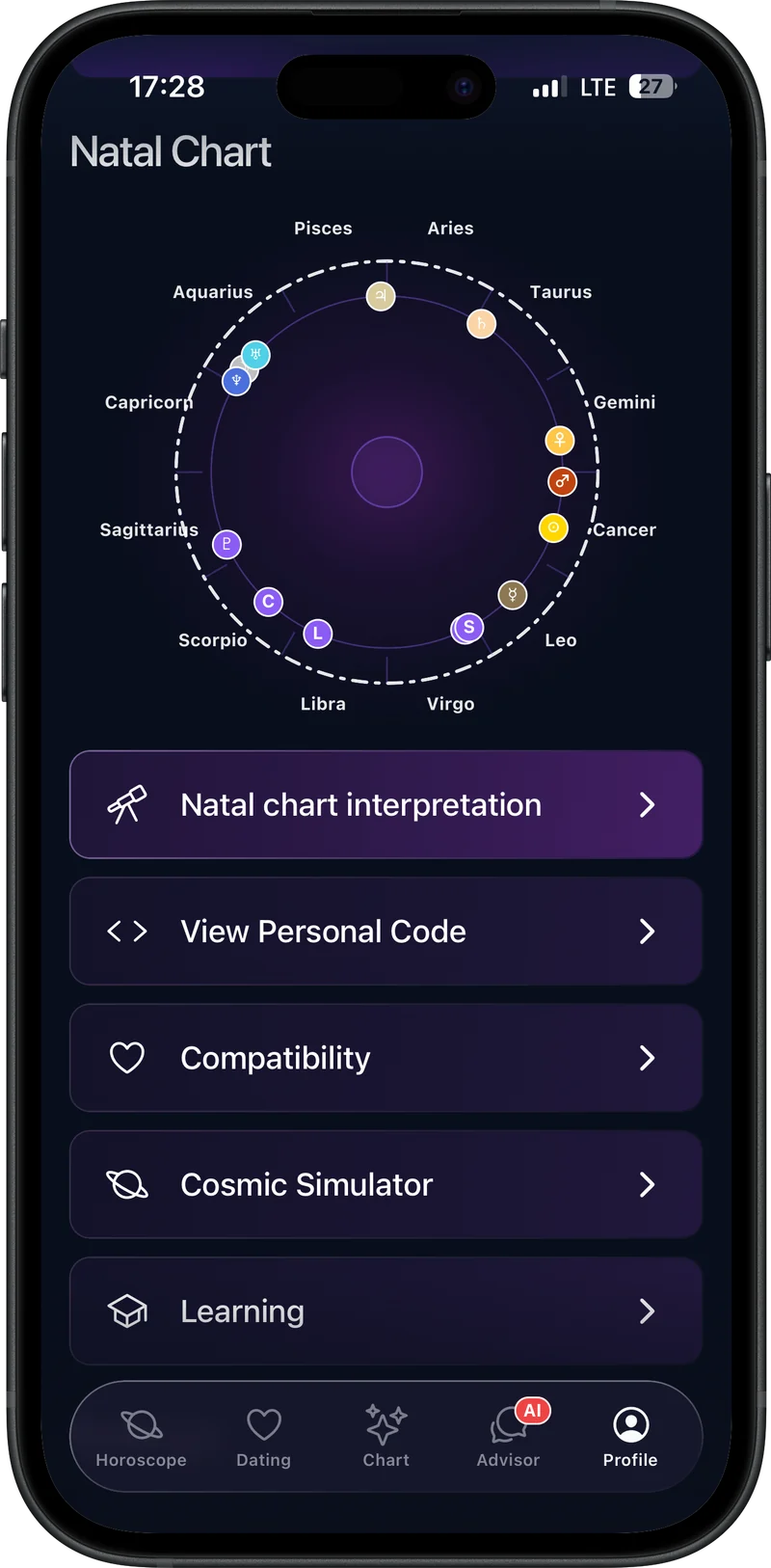
Here's the reframe: even if you share a "common" Sun sign with millions, you are not common. Your Sun is one placement out of dozens. Your free birth chart maps your Moon, your rising sign, and every planet's exact degree at the moment you were born — a combination so specific it's effectively one of a kind. That's the real headline, and it's why the big three of Sun, Moon, and rising tell you far more than any popularity contest. Curious where you actually land? You can join AstraLink early access and read your whole chart, not just your Sun.
Zodiac signs ranked by US birth data
| Rank (rarest → most common) | Zodiac sign | Birth dates | Approx. share of US births |
|---|---|---|---|
| 1 | Aquarius | Jan 20 – Feb 18 | ~7.6% |
| 2 | Capricorn | Dec 22 – Jan 19 | ~7.9% |
| 3 | Pisces | Feb 19 – Mar 20 | ~7.9% |
| 4 | Sagittarius | Nov 22 – Dec 21 | ~8.0% |
| 5 | Aries | Mar 21 – Apr 19 | ~8.1% |
| 6 | Taurus | Apr 20 – May 20 | ~8.2% |
| 7 | Gemini | May 21 – Jun 20 | ~8.3% |
| 8 | Cancer | Jun 21 – Jul 22 | ~8.4% |
| 9 | Leo | Jul 23 – Aug 22 | ~8.6% |
| 10 | Scorpio | Oct 23 – Nov 21 | ~8.7% |
| 11 | Libra | Sep 23 – Oct 22 | ~8.8% |
| 12 | Virgo | Aug 23 – Sep 22 | ~9.0% |
Ranked by US birth-month distribution (CDC/SSA birth records). Shares are approximate and rounded; exact figures shift year to year and differ by country, so read the order as a strong pattern, not a fixed fact.
Frequently asked questions
What is the rarest zodiac sign?
By US birth-month data, Aquarius is most often cited as the rarest zodiac sign, with Capricorn and Pisces close behind. The reason is seasonal: late January and February record the fewest US births, and February is the shortest month. It's a ranking by birth distribution, so the exact order shifts year to year and differs by country — a pattern worth knowing, not a hard fact.
What is the most common zodiac sign?
Virgo usually ranks as the most common zodiac sign in the US, followed by Libra, Scorpio, and Leo. US births peak from July through October, and September is the busiest birth month overall, which lands squarely in Virgo and early Libra territory. As with rarity, this reflects birth-rate data rather than astrology itself, and the leaderboard can reshuffle in other countries or decades.
Why is Aquarius considered the rarest sign?
It's demographics, not destiny. Aquarius runs from January 20 to February 18, overlapping the deep-winter weeks when US births dip to their lowest — partly because February is the shortest month. Those late-January arrivals trace back to spring conceptions, a lower-conception season. So fewer babies arrive under Aquarius than under late-summer signs. Rarity says nothing about personality or worth; it's simply how the calendar and birth rates line up.
Does the rarest zodiac sign change by country?
Yes. Birth seasonality varies with climate, culture, and local patterns, so a sign that's rare in the US can be average elsewhere. Southern Hemisphere countries, for example, have flipped seasons and different birth peaks. The rankings here are based on US birth-month distribution, which is why we frame them as a lens rather than a universal law. Your birthday never changes, but the "rare or common" label depends entirely on the dataset.
Is a rare zodiac sign better or luckier?
No. A less common Sun sign isn't more powerful, more special, or luckier — frequency is just a counting exercise. Astrology works best as a lens for self-reflection, not a ranking of who got the good signs. What actually makes you distinct is your full birth chart, where your Moon, rising sign, and every planet combine into a pattern that's effectively unique. (And no, Ophiuchus isn't a secret 13th sign you're missing — that's a separate debate about constellations versus the tropical zodiac.)
Why are some zodiac signs rarer than others?
It comes down to birth seasonality, not astrology. Births are not spread evenly across the year: in the US they peak in late summer and early autumn (roughly August–October) and dip in the depths of winter. Sun signs tied to the lowest-birth months therefore end up with fewer people, while signs covering the late-summer peak are the most common. The pattern shifts by country and by year, so any ranking is a snapshot of birth data, not a cosmic law.
Does having a rare zodiac sign mean anything special?
No — rarer does not mean better, luckier or more powerful, and astrologers do not read it that way. How common your Sun sign is has no bearing on your chart's meaning. What actually makes you astrologically distinct is the whole chart: your Moon, rising sign, and the exact houses and aspects of all ten planets, which are effectively unique to your birth moment. Run your birth chart to see the parts that are genuinely one of a kind.
Early access · US launch
A horoscope for your chart, not your Sun sign
Early access unlocks your full birth chart and horoscopes generated from your real placements — free at launch, with the early-access offer on Premium.
- First test wave: you’re in before the public launch on November 16
- 3 months of Premium free, then 80% off for a year*
- Free full birth chart + cosmic archetype at launch
- A say in what we build next
AstraLink content is written by our editorial team, reviewed for astrological accuracy, and refreshed as the sky moves. Interpretations are for reflection and entertainment; they are not medical, legal or financial advice.